Today, we take a look at Everglades in Florida. As one of the largest American national parks found outside of Alaska, this wetland is a natural oasis filled with wild surprises.
—
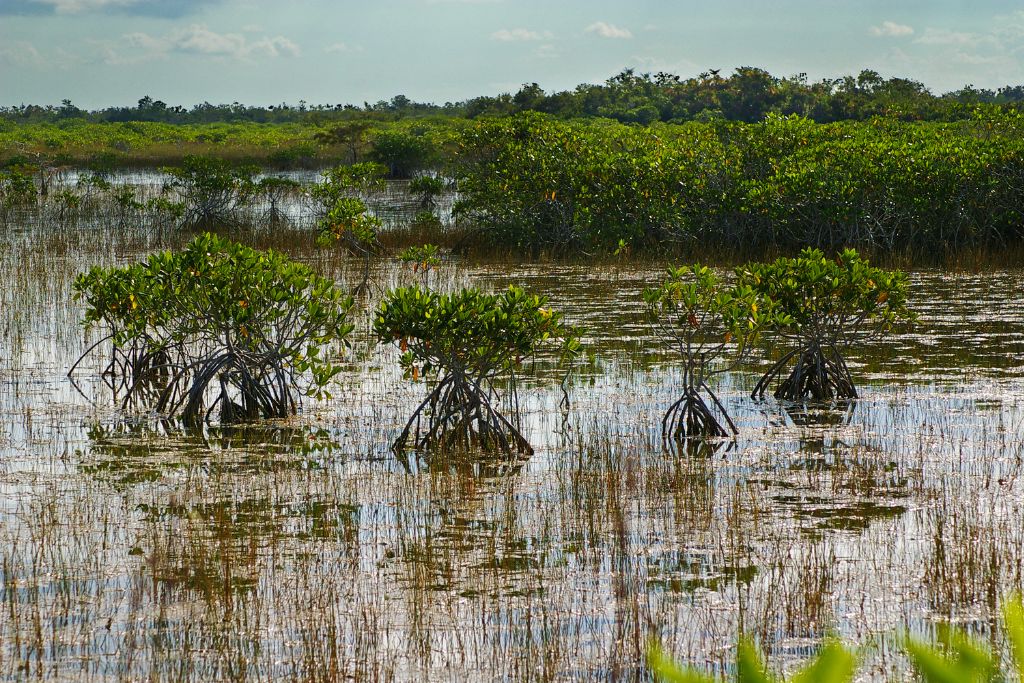
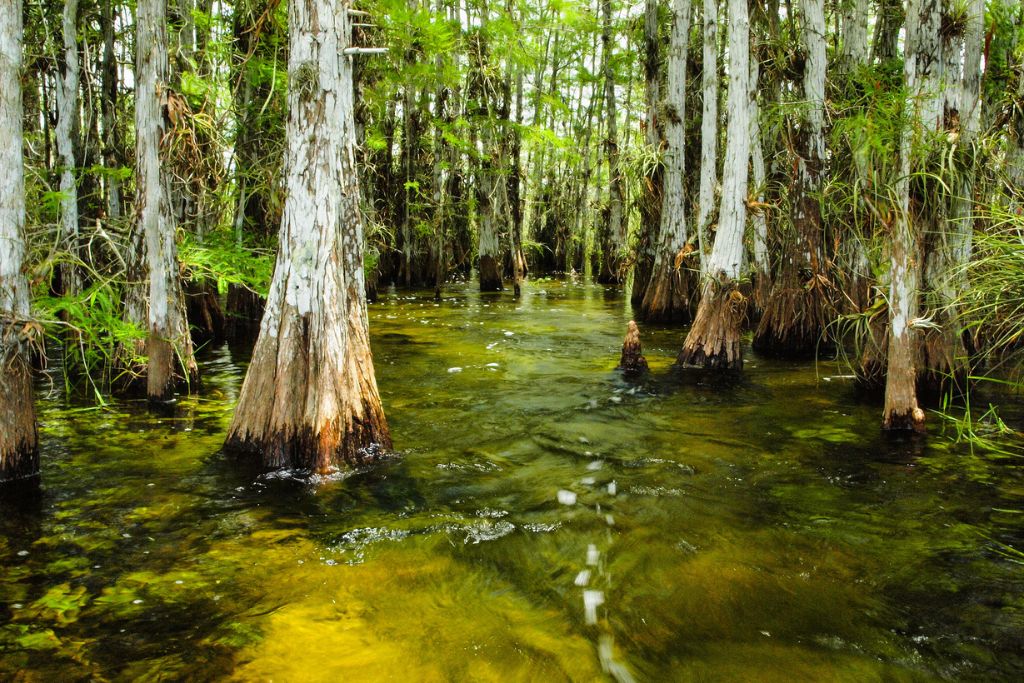
The Everglades ecosystem spreads over 1.5 million acres at the southern tip of Florida. This makes it the largest wetland in the United States. The Everglades itself is composed of several habitat types including cypress swamps, sawgrass marshes, mangrove forests, and marine and estuary areas. Several wildlife areas and smaller state parks are also found within the Everglades National Park.
Unfortunately, significant development and draining have reduced the size of the wetlands by 50% since 1900, taking vital habitats away from birds, wildlife and plants native of the area.
Starting as an overflow from Lake Okeechobee to its north, the Everglades is actually a 50-mile-wide river system flowing southward for over 100 miles (160 kilometers) until it reaches Florida bay at the southern end of the state. Nicknamed “the river of grass” this slow-moving water crosses several unique types of wetland, including one of North America’s largest in-tact mangrove stands.
Everglades National Park is the only place on Earth where alligators and crocodiles live in the same area! Since the Everglades is the meeting place for freshwater that flows from Lake Okeechobee and saltwater from the Florida Bay, it creates a unique mix that allows for both species to live in one natural region.
More than 8 million residents in the state of Florida rely on the Everglades for drinking water – that is about 33% of the state’s population! The freshwater flow helps replenish natural underground water storage systems called aquifers. Increased development and agriculture projects have resulted in the Everglades not receiving as much water as it used to, creating potential for drinking water shortages in the future.
The Everglades has an invasive python problem, and it is a big one.
Burmese pythons were introduced to the area in the 1900s after they were illegally released by people who imported them as exotic pets. These nonvenomous “constrictors” are now established in the marshes of the Everglades and have caused a significant and almost complete loss of small mammals (rabbits, opossums, raccoons, and even foxes). These pythons can grow to be an impressive 20 feet (6 meters) long and weigh 200 pounds (90.7 kilograms).
Thousands of snakes have been removed from the Everglades as part of an effort to control the invasive species.

There are 39 native Florida species within Everglades National Park that are listed as threatened or endangered under the US Endangered Species Act, including five species of sea turtles, the gopher tortoise, American crocodile, West Indian manatee, and the Florida panther. Over 50% of the national park is considered “critical habitat” for these species, offering an additional layer of protection for this amazing section of natural wilderness.
Featured image: Wikimedia Commons.
Check out Kids.Earth.Org’s A-Z Eco-Explorer Series
 Share this article with your friends