Welcome to the new A to Z Eco-Explorer, a series where we explore one environmental subject corresponding to each letter of the alphabet. In today’s article, let us take a look at the Amazon’s pink river dolphins. Also known as Botos or by its scientific name Inia geoffrensis, these dolphins are one of the most enchanting species in South America’s Amazon and Orinoco river basins. Read on to learn some amazing facts about this amazing species.
—
The Amazon pink river dolphin is known for its distinct shade of bubblegum pink. But can you believe that it is not born with this rosy appearance? At first, the dolphin has a greyish tone that only begins to turn pink as the animal ages. Its coloration can range from grey with some light pink speckles to a full flamingo-like pink.
Male dolphins are also known to be pinkier than females. Their brighter tone is caused by markings and scars from fighting, scratching, and playing rough games underwater. The pinkier the male dolphins, the more attention they get from the females, especially during mating season. Just like humans, these dolphins also flush a rosier look when they get shy or excited.
Yet another remarkable aspect of the Amazon pink river dolphin is its adaptation to freshwater environments. Unlike their oceanic relatives, which are well-known saltwater inhabitants, these dolphins have made the vast freshwater ecosystems of the Amazon their unique choice of habitat.
Living in freshwater environments has led to some interesting adaptations in pink river dolphins. Unlike the common marine dolphins, they do not have a pronounced dorsal fin. Instead, they have a short dorsal fin and long flexible flippers, perfect for gliding through the shallow waters of the Amazon. They are also very agile and can turn their heads to a 90-degree angle, which allows them to manoeuvre around underwater obstacles.
Their long and snazzy snout makes it easy to catch prey hidden in the river’s dense and tangled vegetation. Their molar-shaped teeth at the back and conical ones at the front are perfect tools for cracking open a freshwater seafood feast consisting of tough shell crustaceans like crabs, turtles, and sometimes even the scariest fish in the world – piranhas!
Navigating through the Amazon River is no easy task, but our pink friends have got it all figured out! The river dolphins have a funny-looking forehead bump called a “melon”. It helps them to echolocate by producing a fascinating mix of sounds like high-pitched clicks and whistles. These sound waves then bounce off objects in the water, allowing dolphins to communicate and navigate through the river’s twists and turns. It is like having a built-in satellite navigation system like GPS – only that it is for underwater adventures.
These dolphins are also the largest and smartest of the five freshwater dolphin species. Believe it or not, they have large brains with around 40% more brain capacity than humans.
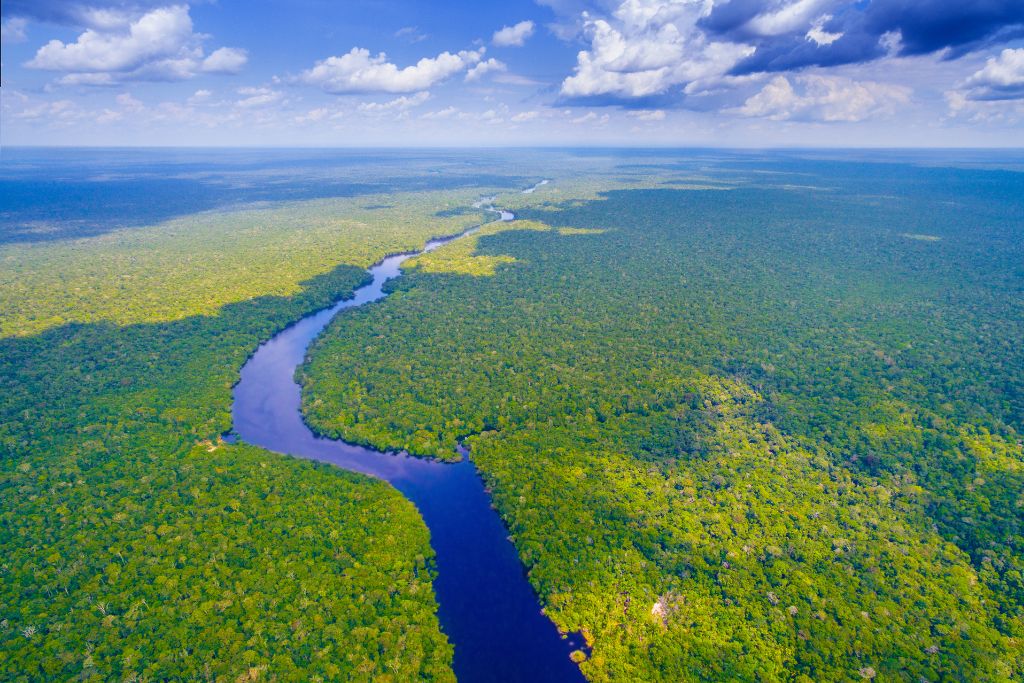
The 6,400-kilometre Amazon River is the largest river by discharge volume of water in the world.
While many dolphins are social beings that travel in groups called pods, pink river dolphins often prefer a more solitary lifestyle. They are mostly spotted swimming alone or in small groups of two to four dolphins. They are known to be shy creatures, mostly spending their time underwater and often only placing the tip of their heads out of the murky waters of the Amazon.
Sadly, these captivating creatures of the Amazon face several human-caused threats like deforestation, water pollution, and loss of prey from overfishing. Last year, over 150 pink river dolphins and Tucuxi river dolphins (another dolphin species) died in Lake Tefe in Brazil due to rising temperatures and low rainfall in the Amazon.
Currently, the Amazon river dolphin is categorized as an endangered species on the International Union for Conservation of Nature (IUCN) Red List, the most comprehensive global inventory of the global conservation status and extinction risk of biological species. However, governments and organisations are actively taking steps to help protect these majestic creatures. Recent conservation efforts include the extension of the fishing ban by the Brazilian government, the signing of the Global Declaration for River Dolphins, and the joint initiative run by Whale and Dolphin Conservation together with the Amazon people.
Legend has it that pink river dolphins possess mystical powers. Some locals believe these dolphins can transform into handsome men at night, known as “boto encantados” to entice women and young girls. Some also feared swimming alone in the river between dusk and dawn as they believed the dolphins could carry you away to a magical underwater city called Encante. Others believed them to be the guardians of the sacred manatees in the Amazon. So those who wished to find a manatee had to reconcile with the river dolphins first! How intriguing, right?
Check this out next: Why Are Frogs Endangered?
 Share this article with your friends