Trash Talk In Action is a joint effort born from a transboundary collaboration between Martina Gaglioti, a marine biologist and diver from Italy, and Kelvin Oyugi, an IT expert, ocean advocate, and ocean literacy field educator from Kenya. The main goal of the initiative is to help empower kids from a local community in Mombasa Kenya to address challenges related to the UN Decade of Ocean Science for Sustainable Development.
—
UN Ocean Decade-endorsed Trash Talk in Action is firstly the tale of an unexpected friendship, even well before a capacity-building project. Through this joint effort we already found a lot of common points: the Ocean is a linking tool for us, not an obstacle. Our mission is to contribute to the global mission of Ocean Literacy going beyond the national boundaries. Ocean advocacy in an inclusive way.
The main goals of the initiative are:
To make this possible, we partnered with Ng’arisha Youth Centre to initiate an Ocean club composed of kids (9-12 yrs.) from the local community in Mombasa, Kenya, doing weekly ocean literacy-related fun and educational activities. Gaglioti is the scientific advisor of the initiative, while Oyugi is the field educator disseminating the ocean literacy information to the kids using gamification, music, and other forms of art such as origami modeling to make it fun and educative.

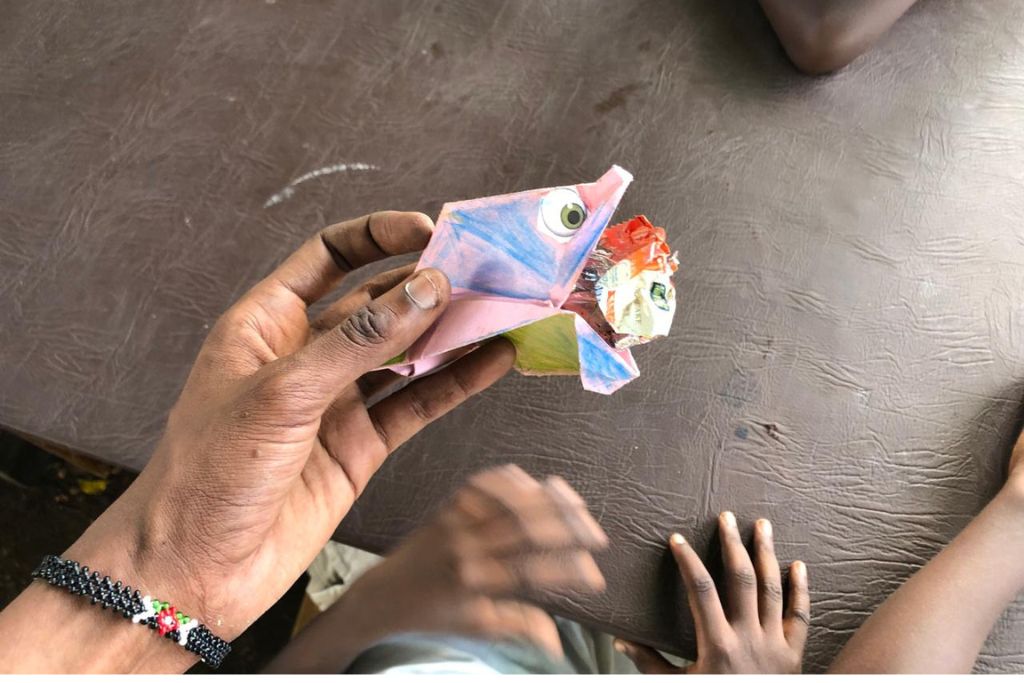
The Origami fish models were made by kids of an informal ocean club in a local community in Kenya. Photo: Kelvin Oyugi.
Apart from ocean literacy educational sessions, the ocean club engages the community in beach clean-up activities and waste plastic upcycling sessions to address marine pollution and mangrove planting to restore marine ecosystems.
Check this out next: Exploring Seaweed Farming as a Solution to Climate Change
 Share this article with your friends